
As my book and posts have highlighted, simply surviving in one of the worst environments in North America was a constant struggle for Maroon residents. While some self-liberated individuals chose to live close to the edge of the Great Dismal Swamp, they traded the risk of capture for opportunities to, at times, to access established communities and resources.
The vast majority of the over 2,000 Great Dismal Swamp residents chose the safer option of residing deeper within that morass. That meant limited access to basic manufactured items such as cooking kettles, axes, hammers, nails, and other tools that colonial pioneers relied upon. It was illegal for merchants to trade with Maroon residents, though some did at great risk. Without enough basic tools and materials, the ability to grow food and hunt was limited. For security reasons, those residing in the swamp who had a few guns would resist shooting them to minimize the risk of discovery. Instead, techniques such as traps and arrows had to be employed. That meant a greater likelihood during the winter months of not having enough food. With food shortages, who had the resources to celebrate a holiday?
While it might not have been universal in all Maroons, my research indicates that many Great Dismal Swamp communities did celebrate December’s biggest holiday. Determined to live free, these people knew the importance of celebrating community. At the time I write about, 1791, fewer first-generation slaves were arriving from Africa. By the end of the eighteenth century, most of the slave population was second- or third-generation. Those people had resided in North America long enough to be exposed to Christianity, and many accepted it. Some slave owners thought mandating Christianity would help keep those in bondage more accepting of their situations.
So, for many, Christmas Day was a highlight of the year. Food was hoarded, an animal might be sacrificed, and alcohol fermented from a variety of plants shared. Hymns and circle dancing celebrated the joy of being together in freedom. And the birth of Christianity’s savior brought hope of one day being delivered from a society that tolerated slavery.
I was taught from an early age to be thankful for what our family had and to share throughout the year with those less fortunate. This year, with too many minorities in America forced to stay hidden to avoid increased immigration enforcement, the parallels to the conditions of the Maroons is striking. With this year’s celebration of Christianity’s savior, who brought messages of brotherhood and tolerance, as the Maroons experienced, stay hidden, and celebrate quietly.
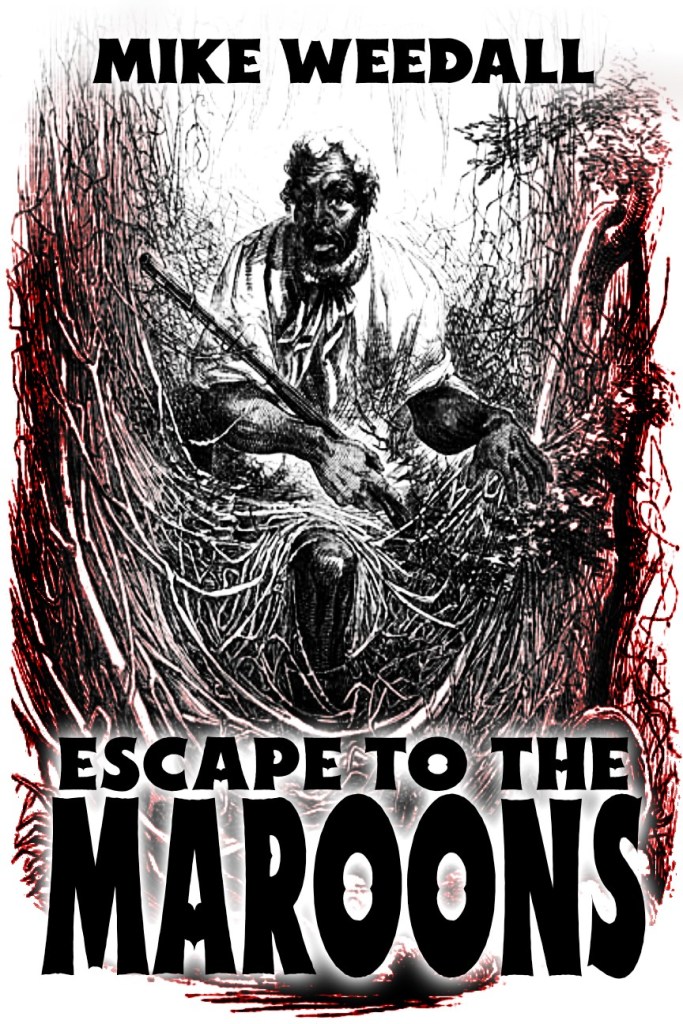
Available from all booksellers
 Mike Weedall's Blog
Leave a comment