
Without giving too much away, there is a spot in my recent book where I reference New Bedford, Massachusetts, as a site where fugitive slaves often fled. That’s the town where I grew up. The city has a fascinating history. Because of whaling, it was once among the wealthiest cities in the world. Over the years, it evolved into a rough-and-tumble blue-collar town where fewer than 50% of residents had a high school diploma. Being the largest fishing port on the East Coast today, it’s still tied to the sea.
Prior to the end of the Civil War, New Bedford was known to bounty hunters as the Gibraltar of Fugitive Slaves. Early New Bedford had a heavily Quaker population that held strong abolitionist beliefs. When slave hunters were spotted entering the city, the town’s church bells rang in alarm. The involvement of all churches indicates it was more than Quakers who were committed to the abolitionist movement. For those hunters bold enough to try, I’ve read some very un-Quaker-like behavior that quickly sent the unwanted on their way.
The most famous self-liberated man to take refuge in New Bedford was Frederick Douglass. Once he escaped from Baltimore, bounty hunters pursued him. Because of the Fugitive Slave Laws passed by the federal government, once he reached anti-slavery New York City, Douglass was still not safe. With assistance, he fled on a train to Newport, Rhode Island. There, two leading New Bedford leaders whisked him by carriage forty miles to his new home. As a way to confuse pursuers, they convinced the fleeing man to change his name from Frederick Baily, to Douglass.
Douglass’ family soon joined him. Locals assisted in providing employment to support his family and his children’s education. Douglass also honed his own writing and speaking skills. After his first public presentation at an abolitionist convention on Nantucket Island, he became a leading voice nationally for the movement.
During my research, I discovered this hidden history that, to my memory, was never taught in the public education I received. Inserting New Bedford into my book brought a newfound pride for my roots. Now I appreciate the downtown cobblestone streets that I trod on were constructed by committed abolitionists standing in opposition to racist federal laws and working to shield the newly free. And down the hill on the waterfront, those newly arrived earned wages for the first time since arriving in shackles to North America.
Today, New Bedford’s local news reports on the latest raids by ICE. As in Douglass’s time, many local organizations are working hard to assist and protect those targeted. While New Bedford continues its long history of supporting the unfortunate, there is no Gibraltar in that city today.
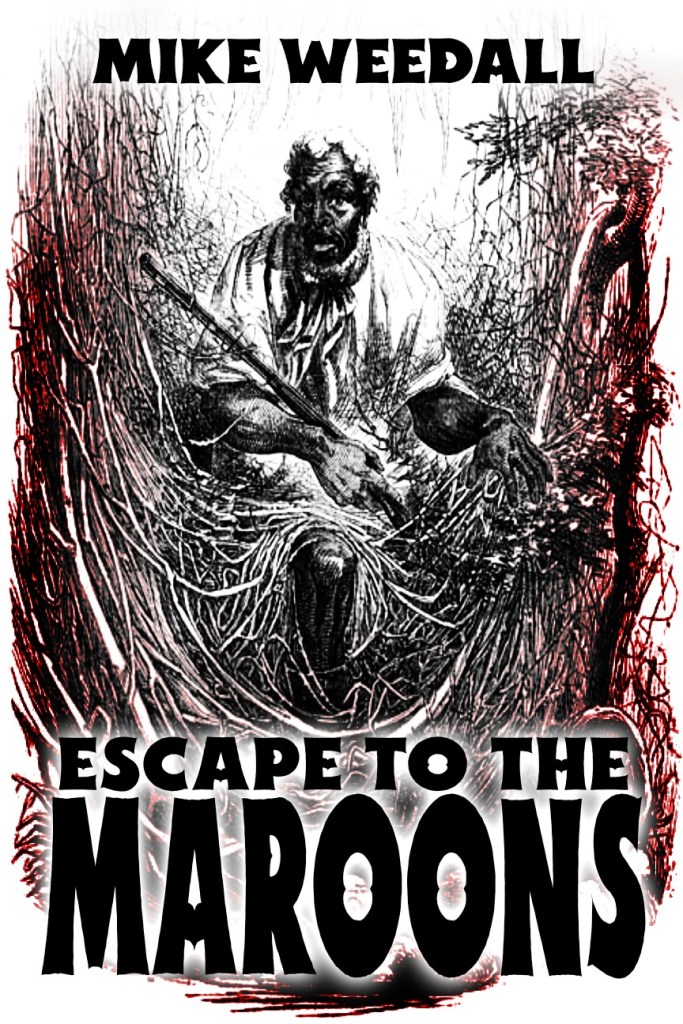
Available at all bookstores.

 Mike Weedall's Blog
Leave a reply to Terry Cancel reply